
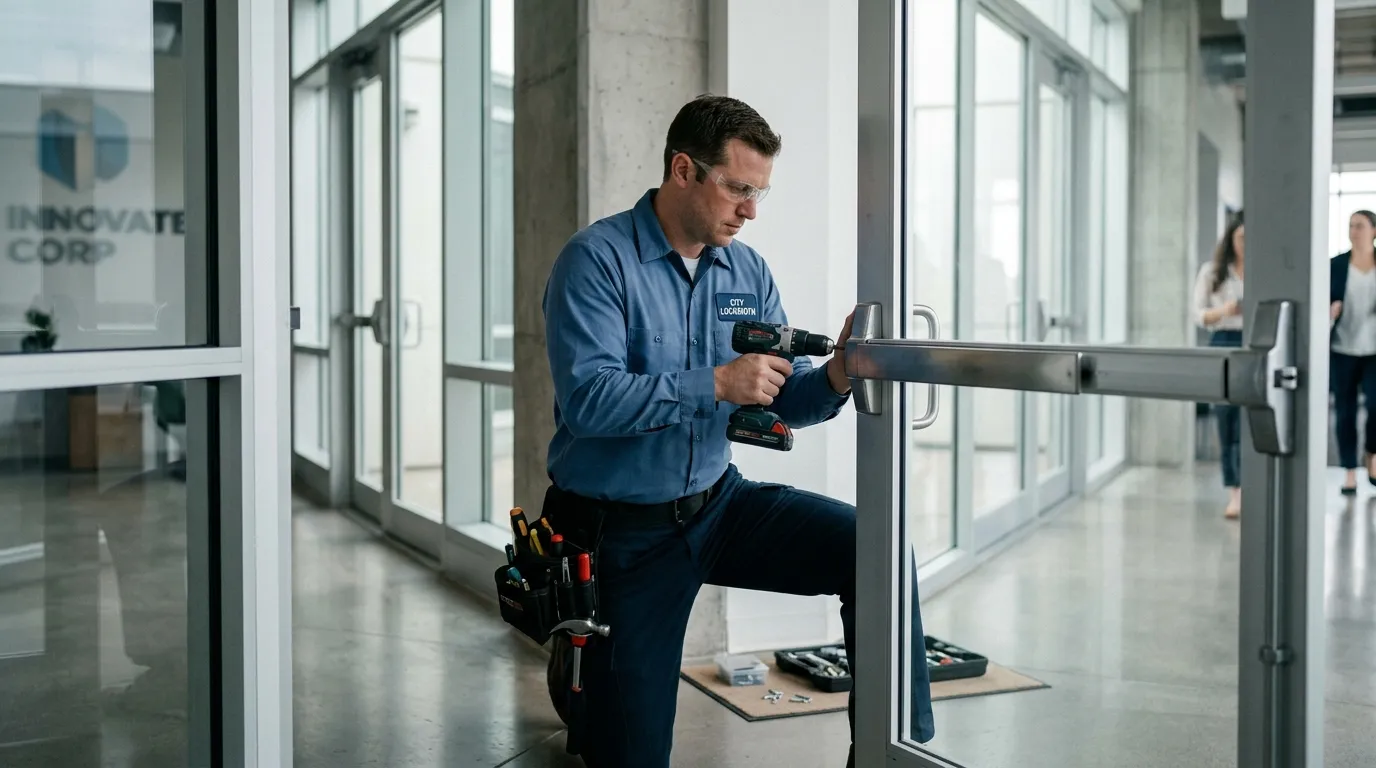
Guaranteeing Safe and Compliant Exits for Commercial Properties
Panic bars, also known as crash bars or exit devices, are spring-loaded metal bars installed horizontally across the inside of exit doors. They are designed to let occupants unlock the door instantly during emergencies simply by pushing against the bar.
Egress Regulations for Business Owners
Local building and fire codes mandate that exit doors on assembly halls, large offices, and retail spaces meet strict egress standards:
- One Motion Egress: Occupants must be able to open the exit door with a single motion (like pushing the crash bar) without needing keys, special tools, or turning handles.
- No Padlocks or Deadbolts: Installing a padlock or a separate deadbolt on an exit door with a panic bar is a serious fire code violation that can lead to heavy fines.
Maintenance & Inspections
Commercial exit hardware undergoes heavy usage. Property managers must inspect exit bars regularly to verify that the latch retracts smoothly when the bar is pressed, and that the door latches securely when closed.
What owners should know
Doors on escape routes must open easily from inside without a key or special knowledge. Panic bars are one way to meet that. Rules vary with occupancy and building type, so ask your local fire prevention office or an inspector.
Common problems
Bars that stick, latches that do not retract and strikes that have moved. Some owners add chains or padlocks at night, which is unsafe.
Keep records
Test the door regularly, write down the result and repair faults quickly. See fire-rated doors.
Questions about a lock or key problem? Apna Locksmith is a Brampton-based mobile locksmith serving Brampton, Vaughan, Caledon, Etobicoke and Halton Hills. Call (289) 406-1500 or see our service areas.