
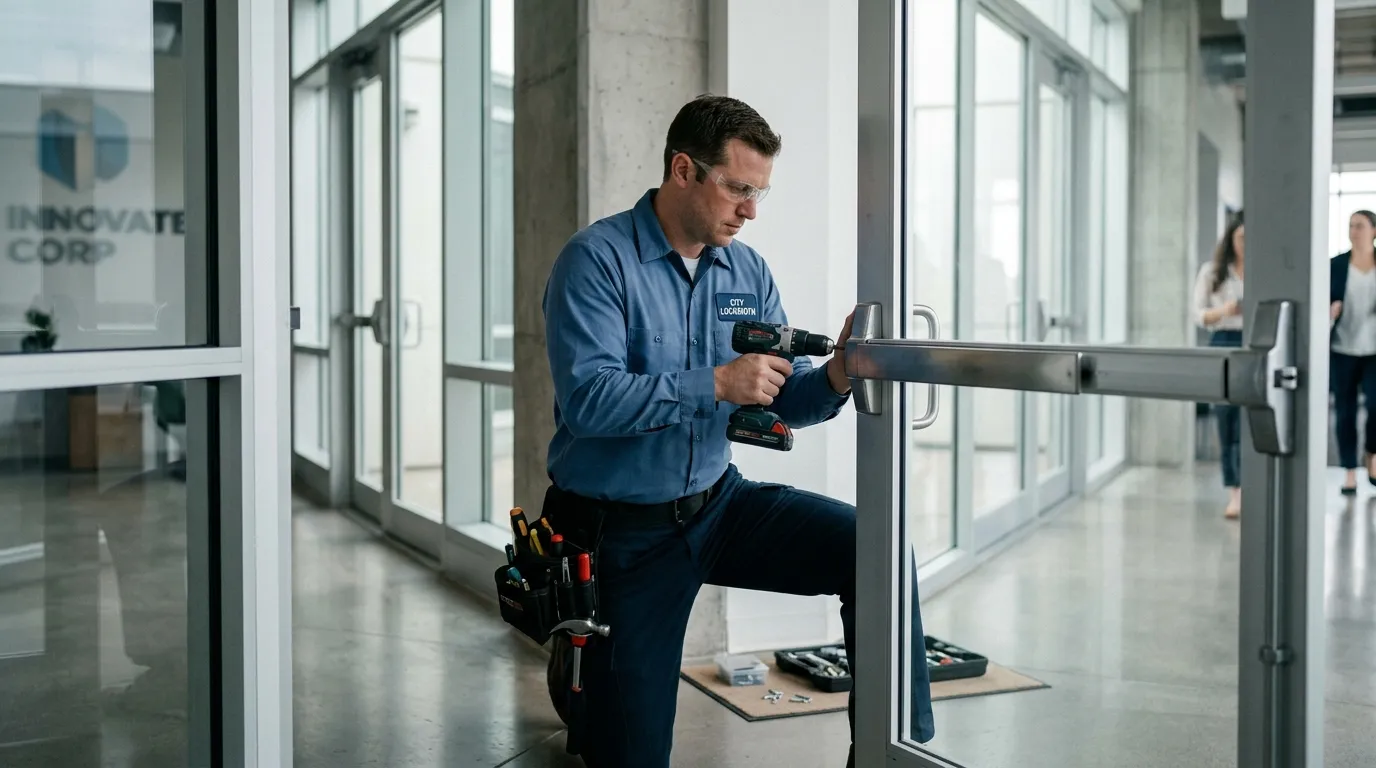
The Crucial Hardware Regulations for Fire Containment Doors
Fire-rated doors are designed to resist the spread of smoke, fire, and heat between building compartments. Unlike standard doors, fire doors are heavily regulated, and their hardware must meet strict safety certifications.
Core Hardware Requirements
- Self-Closing: Fire doors must be equipped with an active, certified door closer. The door must close automatically after opening.
- Self-Latching: The door must feature an active latch bolt that clicks into the strike plate. Magnetic locks or simple friction latches are not permitted on primary fire doors unless they are wired to release during fire alarms.
- No Hold-Open Devices: Proping open a fire door using a wooden wedge or a kickstand is a serious code violation. Only electromagnetic hold-opens linked to the building’s fire alarm system are allowed.
What the rating means
A fire-rated door assembly is tested as a complete system: the door, the frame, the hinges, the latch and often the closer. The rating is a time, such as 20 or 45 minutes, for which it should resist fire and smoke. The label is usually on the hinge edge.
Hardware that affects the rating
Adding extra holes, replacing a latch with the wrong model or removing a closer can void the rating. Latches on these doors generally must engage every time the door closes.
What to do
Before you change hardware on a rated door, ask the property manager or a locksmith who knows the requirements. Keep the label intact and do not prop the door open. See panic bars and egress rules for exit doors in businesses.
Questions about a lock or key problem? Apna Locksmith is a Brampton-based mobile locksmith serving Brampton, Vaughan, Caledon, Etobicoke and Halton Hills. Call (289) 406-1500 or see our service areas.