
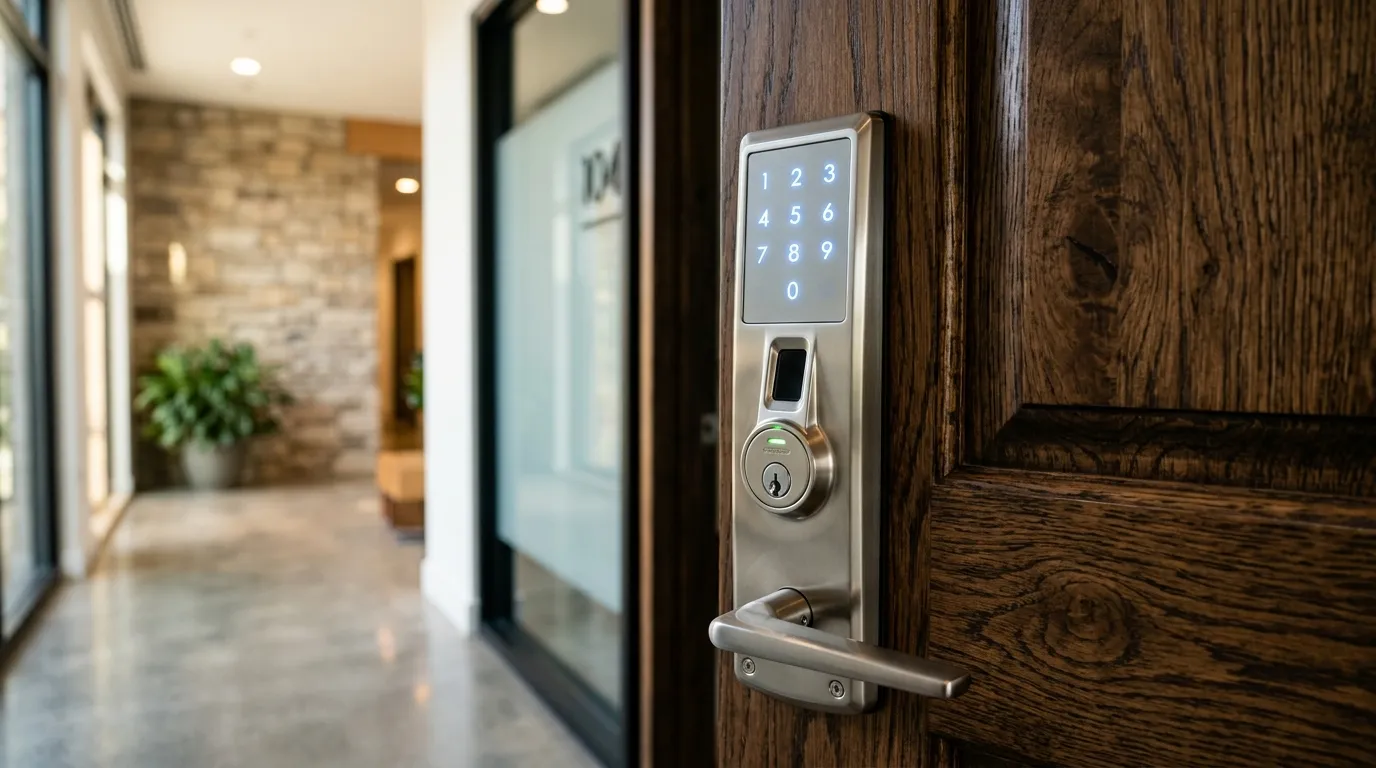
Evaluating the Cyber Security Protocols of Modern Keyless Entry
Smart locks offer convenient features, but because they connect to the internet, homeowners often worry about remote hacking attacks. Let’s evaluate the facts and myths surrounding smart lock cyber security.
Fact: High-End Locks Use Bank-Grade Encryption
Reputable smart lock brands (like Yale, August, and Schlage) use Advanced Encryption Standard (AES-128 or AES-256) along with Bluetooth and WiFi handshakes. This is the same security protocol used by banks and online transactions, making it virtually impossible for someone to sniff your lock’s signal.
Myth: Hackers Can Easily Open Your Door
In reality, physical bypasses (like kicking a door, breaking a window, or picking a cheap cylinder) are much faster and more common than a complex cyber attack. A burglar is highly unlikely to sit in your driveway with diagnostic software to hack a smart lock when a window is exposed.
Where the real risks are
Most successful attacks on smart locks come from weak passwords, shared accounts and old firmware rather than clever radio tricks. A lock is only as secure as the account that controls it.
Simple protections
Use a unique password, turn on two-step verification, update the lock and app when updates are offered, and remove users who no longer need access. Choose a well-known brand that publishes security updates.
Compare with mechanical risks
A mechanical deadbolt can be picked or bumped, and a lost key can be found by anyone. Both have risks. A solid door, frame and strike matter for either type. See how power and wifi outages affect smart locks and installing a wifi gateway.
Questions about a lock or key problem? Apna Locksmith is a Brampton-based mobile locksmith serving Brampton, Vaughan, Caledon, Etobicoke and Halton Hills. Call (289) 406-1500 or see our service areas.