
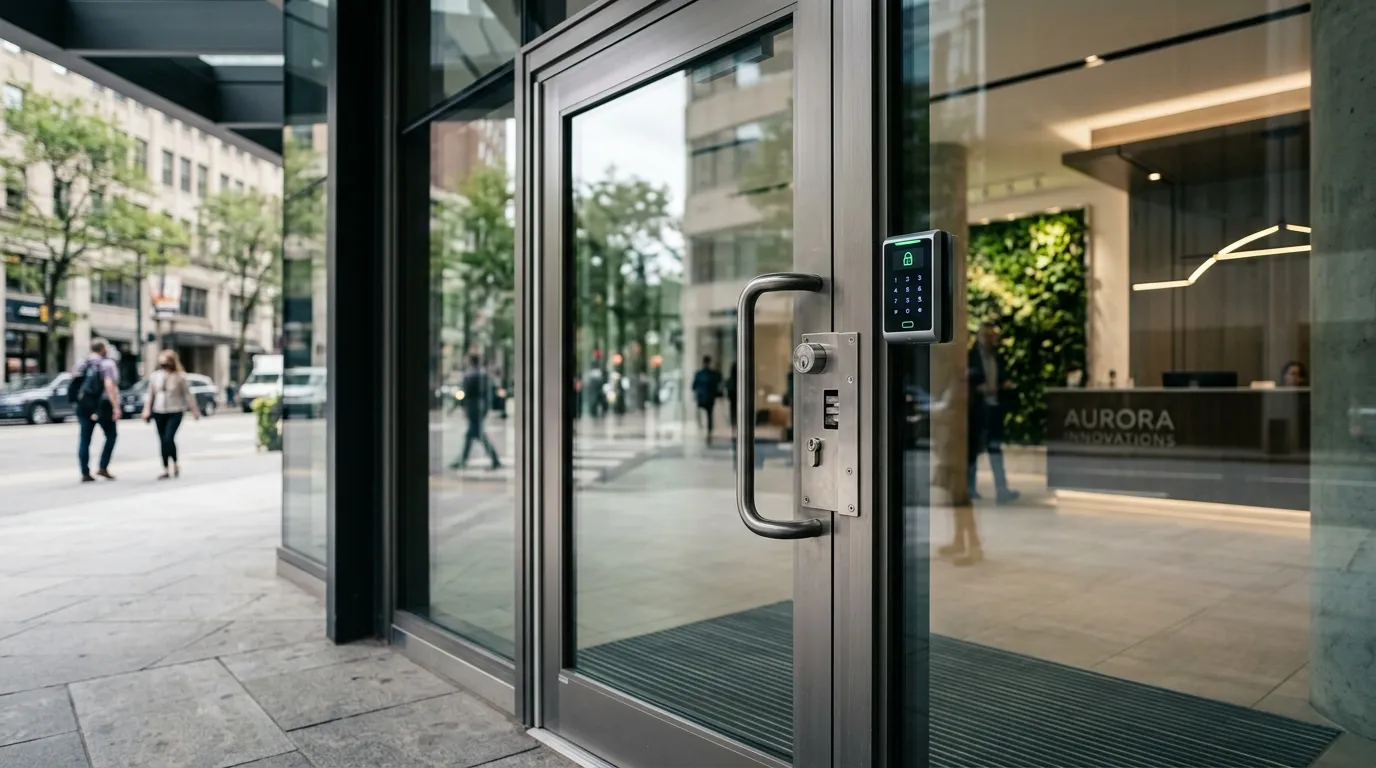
The Core Lock Hardware of Access Control Systems
Electric strikes are a fundamental component of modern access control systems for commercial properties. They replace the standard metal strike plate in the door frame with an electronic lock latch that can be released remotely.
How an Electric Strike Works
- Door Locked: When the door is closed, the mechanical latch of the lock sits inside the strike keeper, keeping the door secured.
- Releasing the Lock: When a user swipes an access fob or presses an intercom button, electrical power is sent to the strike, releasing the keeper so the door can be pushed open without turning the door handle.
Fail-Safe vs. Fail-Secure Configurations
When choosing electric strikes, business owners must select between two safety modes:
- Fail-Secure (Standard): The lock requires power to unlock. If the power goes down, the door remains locked from the outside (ideal for high-security areas).
- Fail-Safe: The lock requires power to stay locked. If the power fails, the lock releases automatically, allowing anyone to open the door (essential for emergency exits).
How it works
An electric strike replaces the standard strike plate. It either releases to let the latch pass or stays locked, controlled by a button, keypad or card reader. There are fail-secure and fail-safe types.
Where it’s used
Offices with buzzers, shared entrances and doors that need remote release. It lets staff unlock a door without leaving their desk.
Points to plan
Check power supply, door alignment and fire rules. Have a mechanical key override. See access control systems.
Questions about a lock or key problem? Apna Locksmith is a Brampton-based mobile locksmith serving Brampton, Vaughan, Caledon, Etobicoke and Halton Hills. Call (289) 406-1500 or see our service areas.