
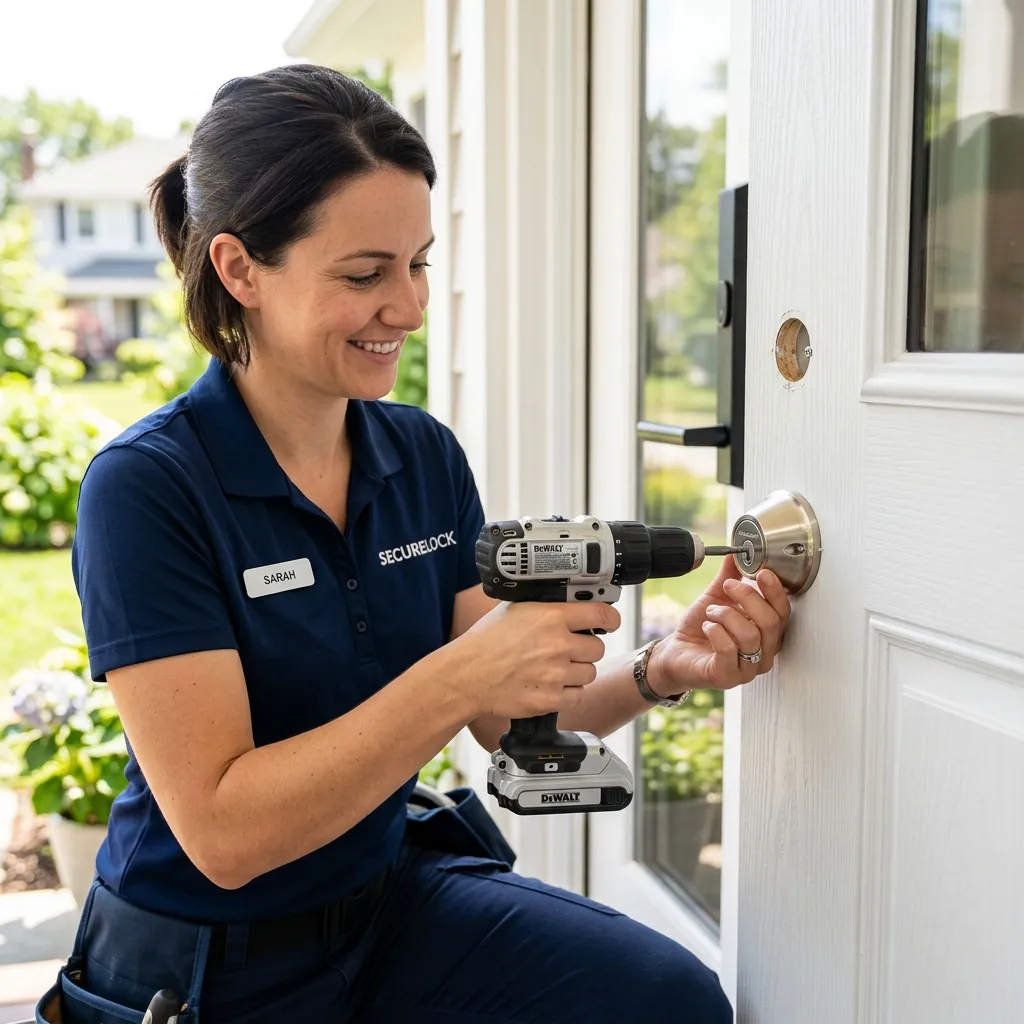
Two homeowners with the same problem, unknown keys after a move, can end up spending very different amounts because they chose differently. Here is how to decide without being sold something you do not need.
What each option actually does
Rekeying keeps the lock body and swaps the pins inside, so a new key works and the old ones do not. Replacing removes the lock and installs a different one.
Choose rekeying when
- The locks are in good shape and turn smoothly.
- You like the hardware.
- You want several doors to share one key.
- You just need old keys to stop working.
Choose replacement when
- The lock is loose, corroded or sticky.
- The hardware is builder-grade and you want better.
- You want a keypad or smart lock.
- The lock was damaged in a break-in.
A quick decision guide
| Situation | Best choice |
|---|---|
| Bought a house, locks are fine | Rekey |
| Bought a house, locks are cheap and worn | Replace |
| Tenant left with keys | Rekey |
| Break-in damaged the lock | Replace |
| Want to add a keypad | Replace |
Cost thinking
Rekeying usually costs less per lock because the hardware stays. If you have four or five locks, though, the gap narrows, and a mid-quality replacement may be worth it. The door itself matters more than either choice: a strong lock on a weak frame protects little.
Check the door at the same time
While we are there we look at the strike plate and the frame, because a deadbolt that has only 12 millimetres of engagement into a thin jamb is not doing its job. Learn more on our rekeying and lock change pages.
For Brampton buyers
New-build owners in Brampton, Vaughan and Caledon often need a rekey because builder keys are in circulation. Older homes may have mixed hardware, so we look at each door and give you an honest recommendation.
Questions about a lock or key problem? Apna Locksmith is a Brampton-based mobile locksmith serving Brampton, Vaughan, Caledon, Etobicoke and Halton Hills. Call (289) 406-1500 or see our service areas.