
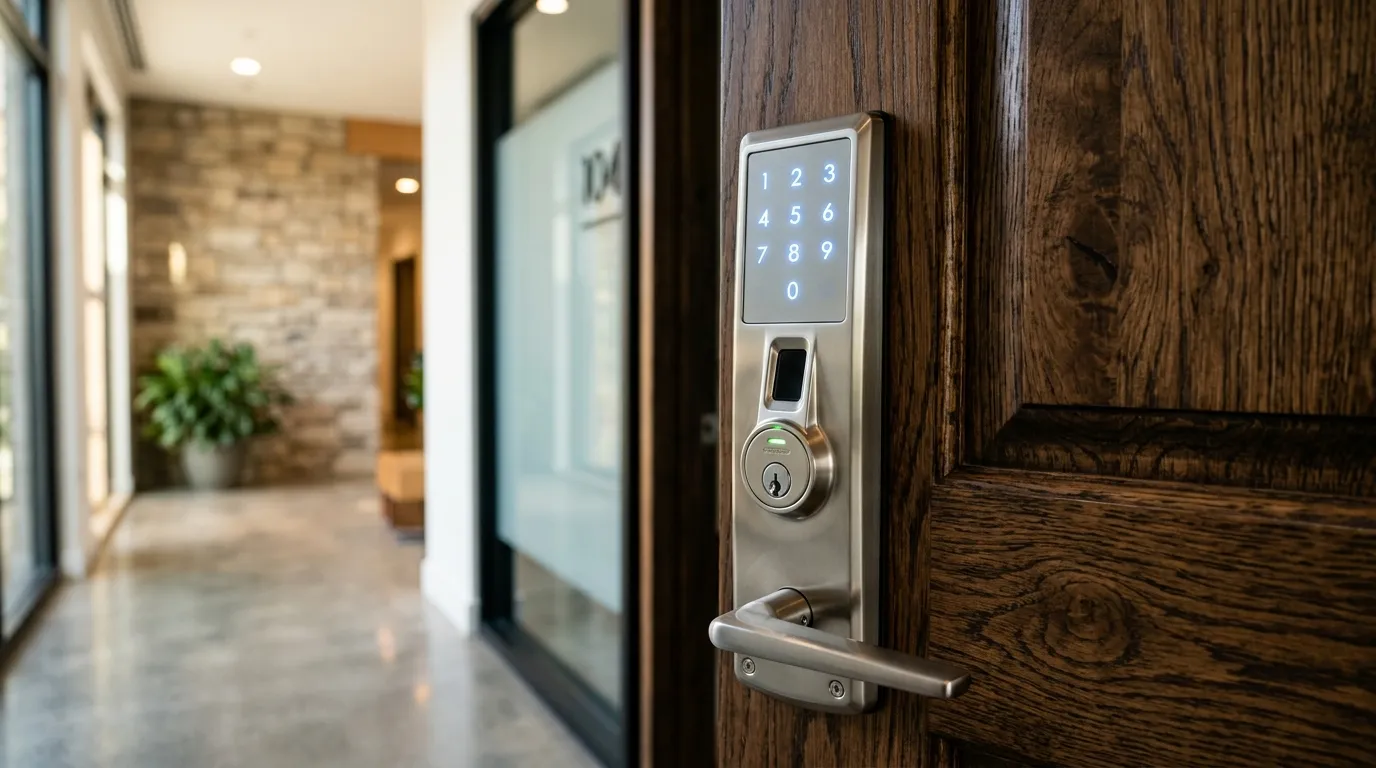
People ask whether a PIN code is safer than a key. The honest answer: it depends on how the code is used, and the risks are different, not necessarily bigger.
Where keys are weaker
Keys can be lost, copied without your knowledge and handed around. If a key is lost, the lock must be rekeyed, which costs time and money. With a keypad, a lost key becomes a deleted code.
Where keypads are weaker
Codes can be shared too widely, shoulder-surfed, or worn into the keys (fingerprints on the most-used digits). Cheap models can have weak points. Batteries fail, especially in cold.
How to use a keypad safely
- Give each person their own code, if the model allows it.
- Avoid simple codes: birthdays, 1234, the street number.
- Remove codes when a cleaner, guest or tenant leaves.
- Use a model with a backup key or a way to power it externally.
- Wipe the keypad now and then so fingerprints do not reveal the digits.
Who benefits most
Rental owners, families with children who lose keys, small offices with staff turnover, and anyone who gives access to trades.
Who should think twice
If the door is old, warped or badly aligned, a motorized lock will struggle. Fix the door first. In a condo, check the rules of your corporation before changing the lock.
Mechanical vs electronic: a simple rule
For a door that few people use, a good deadbolt is fine. For a door that many people use, a keypad is easier to manage. Some homeowners choose both: a keypad on a side entrance and a key on the front.
Ready to try one?
See our keyless entry and smart lock installation pages for how we set up and test them.
Questions about a lock or key problem? Apna Locksmith is a Brampton-based mobile locksmith serving Brampton, Vaughan, Caledon, Etobicoke and Halton Hills. Call (289) 406-1500 or see our service areas.