
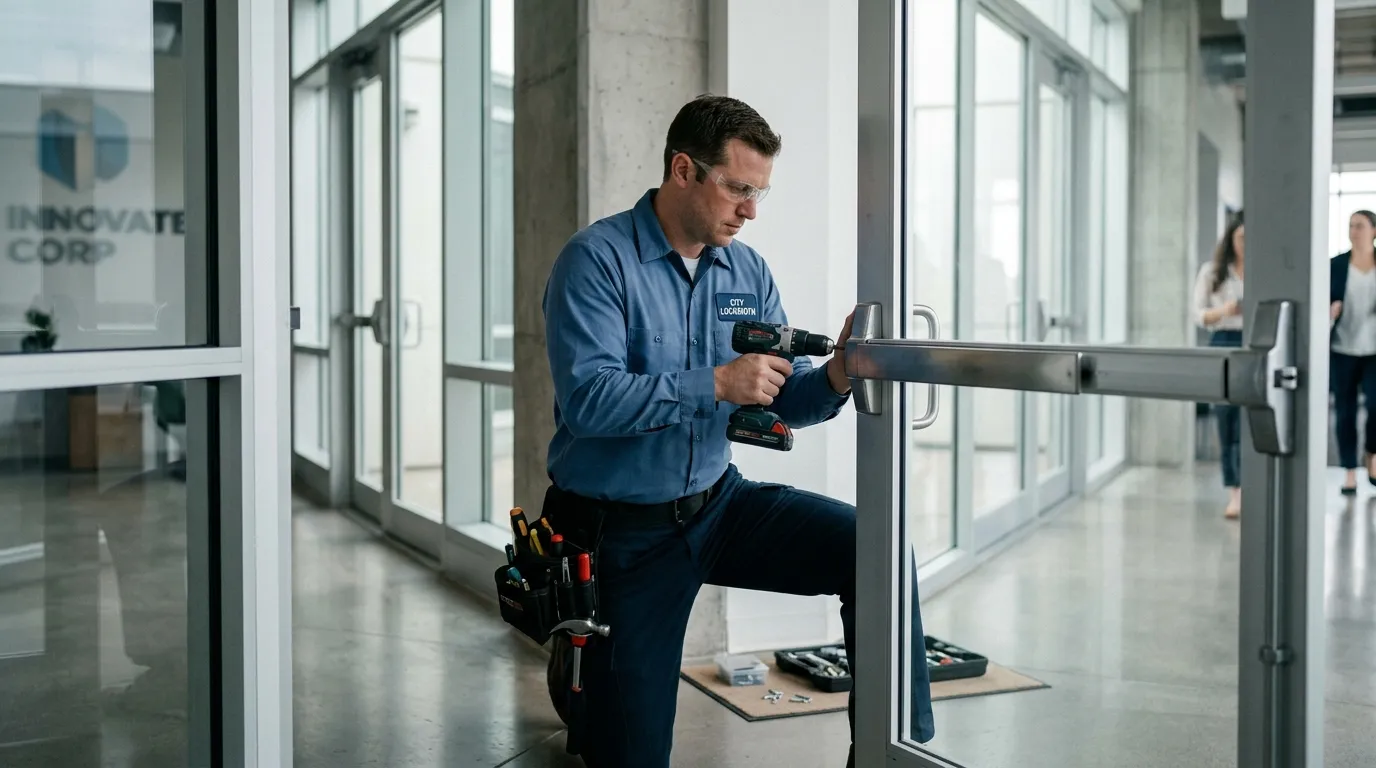
A door closer that is set wrong is one of the most common causes of complaints in shops and offices: doors that slam, doors that hang open, doors that never quite latch. Most can be fixed with a screwdriver and five minutes.
How a closer works
A closer stores energy as you open the door and releases it slowly as the door closes. Two valves control the speed: one for the main swing, one for the last few centimetres (the latching speed).
Where the adjustment screws are
Look on the body of the closer for small screws or valves, often marked with numbers or letters. Different brands mark them differently. A photo of yours helps us tell you which one does what.
Adjusting the speed
- Sweep speed: how fast the door swings from open to almost closed.
- Latch speed: how fast it moves through the final segment.
- Backcheck: how the door slows when it is opened wide.
Turn each screw a quarter turn at a time, clockwise to slow and counterclockwise to speed up (this varies by brand). Test the door after each change.
Signs the closer needs replacing
- Oil leaking from the body
- The door drifting closed or slamming even after adjustment
- Arms that are bent or loose
- A door that is now too heavy for the closer
Why it matters
A door that slams shortens the life of hinges and frames. A door that does not latch is a security gap. Fire doors that do not close fully do not protect.
Seasonal checks
Oil thickens in the cold, so doors that worked in summer may close too slowly in winter. Check closers when the temperature changes.
Need help?
See our door closer and panic bar repair page. We work on doors in Brampton, Vaughan, Caledon, Etobicoke and Halton Hills.
Questions about a lock or key problem? Apna Locksmith is a Brampton-based mobile locksmith serving Brampton, Vaughan, Caledon, Etobicoke and Halton Hills. Call (289) 406-1500 or see our service areas.